Charcuterie Board Ideas for Every Occasion

When friends drop by, and you don’t feel like cooking, a charcuterie board is the perfect solution. It looks special, takes almost no effort, and gives everyone something to nibble on while you actually enjoy yourself. Classic charcuterie boards started as simple trays of cured meats and cheese, but today, people use charcuterie board ideas for almost any kind of grazing spread like healthy snack boards, brunch boards and even dessert boards. Here are some tips for making any kind of board.
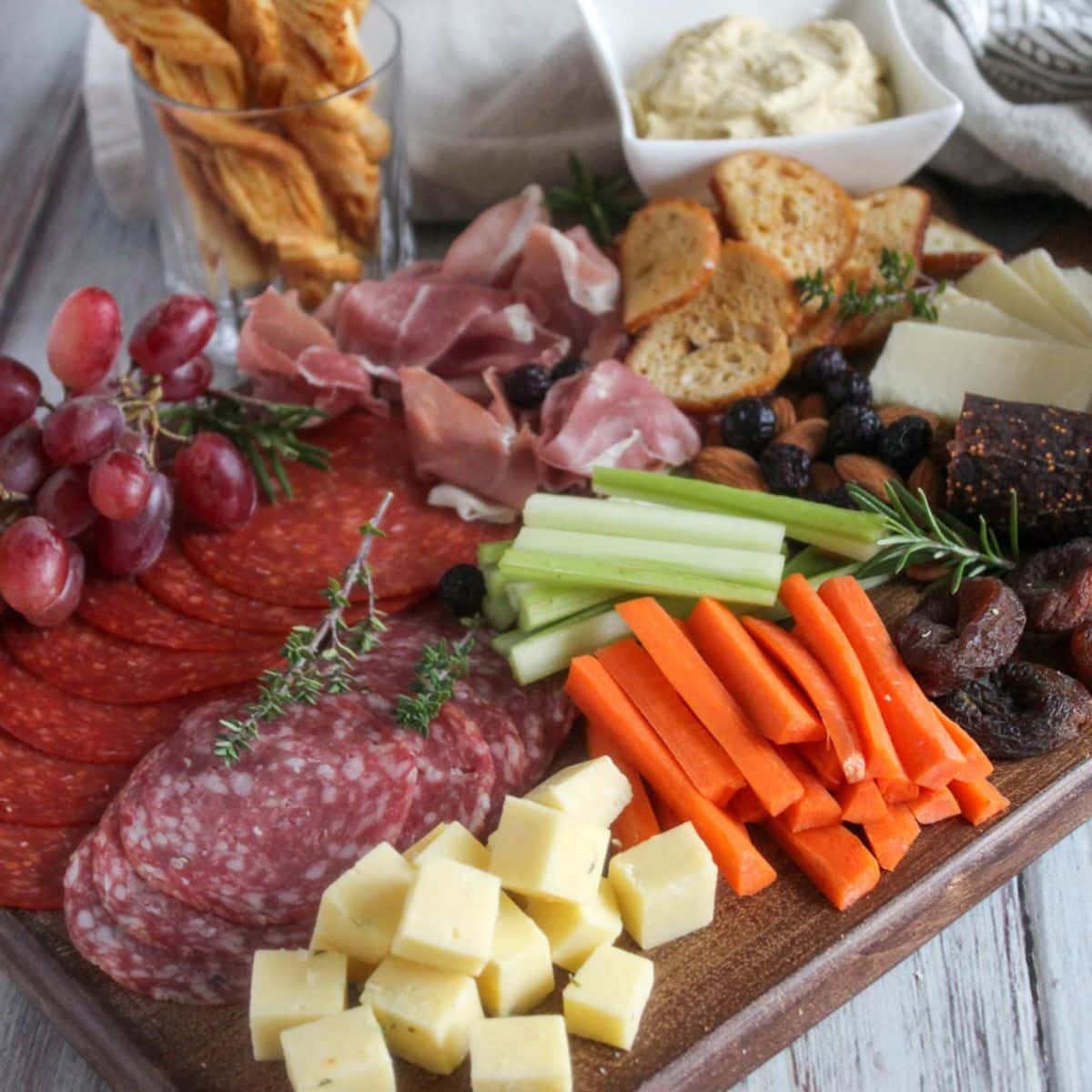
The Essentials
- A simple formula works for any theme: 1 to 2 proteins, 2 to 3 cheeses or mains, 2 to 3 crunchy items, at least 2 fruits or veggies, and 1 to 2 dips or spreads.
- You can size a board as an appetizer or full meal by planning portions per person, then filling gaps with fruit, veggies, and simple extras like nuts and bread.
- Use simple styling tricks: place larger items first, add color and texture, and ensure everything is easy to grab for guests.
- Explore healthy variations like fruit and veggie boards or protein-forward options for light meals or snacks.
- You can adapt charcuterie boards for any ocassion, like lunch, healthy snack boards, or holiday shapes.
- To avoid overspending use seasonal produce and budget-friendly ingredients to make attractive boards.
What Charcuterie Boards Are (And How They Became Grazing Boards)
Charcuterie is a French word that means cured meats. Think salami, prosciutto, ham, and pâté. Traditional Charcuterie Boards were built around those meats, plus cheese, bread, and small extras like pickles, olives, and mustard.
Over time, people began using the phrase “Charcuterie Board” for a wide range of snack trays. Even boards with no meat at all often still get called charcuterie. You will see veggie boards, brunch boards, and even candy boards all under that label.
In this post, I refer to Charcuterie Board Ideas that cover both classic meat and cheese boards and newer themed boards. That includes lunch boards, healthy boards, veggie boards, brunch boards, and more. If it is arranged on a board and meant for grazing, it counts.
If you want a step-by-step recipe for a lighter-style board, this healthy charcuterie board recipe is a great example.
Small Items That Pull it Together
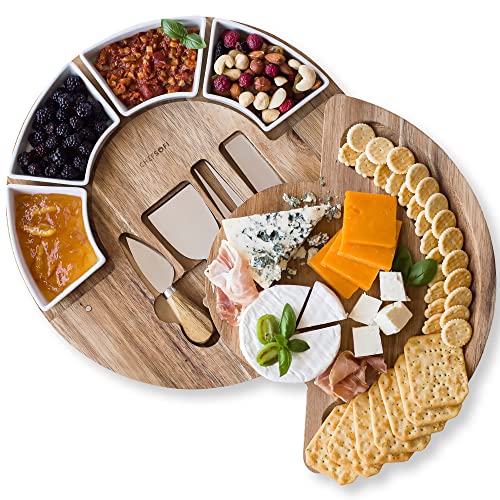
Charcuterie Cheese Board and Platter Set –
Buy Now → Buy Now →
  Buy Now →
 What You Need To Build Any Charcuterie Board
You don’t need a special board or fancy tools to make a great charcuterie board. Use what you already have first, like a cutting board, large plate, or baking sheet, before you think about buying anything new. As long as you can pile on some snacks and people can reach them, it will work.
Basic tools and serving pieces
- A serving board, baking sheet, or large platter
- Small bowls or ramekins for dips and spreads and tiny items
- An assortment of cheese knives or any small, sharp knife
- Small spoons for jams and spreads
- Toothpicks, small forks or cocktail picks for accompaniments
- Parchment or wax paper if your board is not food safe
A large cutting board, two smaller ones or even a sheet pan lined with parchment works just fine. A mix of shapes looks nice, so don’t worry if things don’t match.
Note: Keep food safety in mind. Refrigerate meats, hard cheeses, and dips until serving time. Keep hot items hot and cold items cold. On a warm day, try put out smaller amounts and refill often.
Simple formula for planning your board
This easy formula works for almost any board size or theme:
- 1 to 2 proteins (meats, eggs, beans, or tofu)
- 2 to 3 cheeses or other main items
- 2 to 3 crunchy items (crackers, bread, nuts, pretzels)
- 2 fresh fruit or veggies
- 1 to 2 spreads or dips
- Bread or pita on the side
Mix colors, textures, and flavors. Aim for:
- Salty (meats, olives, cheeses)
- Sweet (fruit, honey, dried fruit)
- Crunchy (nuts, pretzels, raw veggies)
- Creamy (cheese, hummus, yogurt dip)
If the board looks like a mix of colors and shapes, you are doing it right.
Portion guide for realistic serving sizes
Use these portion suggestions to avoid overbuying, prevent food waste, and help everyone enjoy just the right amount without going overboard.
For an Appetizer board before a meal:
- Cheese: 1 to 1.5 ounces per person
- Meat: 1 to 1.5 ounces per person
- Crackers and bread: a small handful per person
- Fruit and veggies: a few pieces of each per person
For a dinner board that replaces a full meal:
- Cheese: 2 ounces per person
- Protein (meat, eggs, beans, tofu): 3 to 4 ounces per person
- Bread, grains, or potatoes: at least 1 to 1.5 cups per person
- Plenty of veggies and fruit to fill the board
For a small group, stick to the lower end of the range and add one or two simple fillers like nuts or sliced apples. For a larger crowd, go toward the higher end and repeat key items on multiple plates so everyone can reach them easily.
Basic Styling Tips To Make Any Charcuterie Board Look Amazing
You don’t need design skills to make a great board; just a few simple tricks can make any charcuterie spread look full, inviting, and delicious.
✨Want to make charcuterie-style dinners part of your weekly routine without the stress or planning? Grab my free Dinner Board Matrix, a flexible, guide to building balanced, satisfying boards for quick dinners. Check it out here!
Start with bowls and big items, then fill in the gaps
Think of your board like a puzzle.
- Place small bowls first. Use them for dips, olives, nuts, and messy items.
- Add cheeses or other main items in 2 or 3 spots. Leave some space around them.
- Tuck meats next to the cheeses or bowls.
- Add crackers, bread, and fresh produce in small piles.
- Finish with tiny fillers like nuts, dried fruit, or herbs in empty spaces.
This order works for most charcuterie boards. You build the “anchors,” then fill empty spots so the board looks full.
Use color, texture, and layers for a full look
Color is what makes a board pop. Try these quick tips:
- Fan crackers or stack them in short rows.
- Use folding techniques for sliced meats, folding them into loose ribbons or small rolls.
- Slice some fruit and leave some whole for a relaxed look.
- Avoid putting items of the same color side by side. Break up white cheeses or pale crackers with dark grapes or bright berries.
- Add simple garnishes, like sprigs of parsley, rosemary, or thin lemon slices.
Don’t worry about being perfect, aim for “abundant and casual,” not “formal and stiff.”
Make it easy to grab and eat
Pretty is great, but function matters more. Guests should not have to fight the board.
- Cut hard cheeses into slices, cubes, or wedges.
- Roll or fold meats so people can grab one piece at a time.
- Put out small tongs, forks, or toothpicks, especially for shared meats and cheeses.
- Offer a separate knife for each spread if you can.
- Add simple labels if you want, like “spicy,” “goat cheese,” or “gluten-free crackers.”
If you can grab it with one hand and finish it in two bites, you’re doing it right.

Easy Charcuterie Boards For Last Minute Guests
Sometimes you just need snacks on the table fast. These boards are all about speed and store-bought items.
5-ingredient no-cook appetizer board
This one is simple and great for game night or a casual visit.
Try this combo:
- 2 cheeses, such as cheddar cheese and brie cheese
- 1 cured meat, like salami or prosciutto
- 1 type of crackers or sliced baguette
- 1 fresh fruit, like grapes, berries, or apple slices
Swap ideas: use goat cheese instead of brie cheese, pepper jack instead of cheddar cheese, or sliced turkey instead of cured meat. Add carrot sticks or olives if you have them. Set it all on a cutting board, add a small bowl for olives or nuts if you like, and you are done.
Pantry and fridge clean out snack board
This board uses what you already have and still feels planned. You can grab just about anything you have. Here are some ideas:
- Leftover cut veggies
- Half-used blocks of cheese
- Open jars of olives or pickles
- Dips like hummus, salsa, or yogurt
- Random crackers, pretzels, or bread
- Nuts, seeds, or dried fruit
Group flavors so it makes sense. Keep salty things near each other, sweet things together, and place dips in the middle of the items that match them.
This is perfect for movie night, after-school snacks, or a lazy weekend lunch.
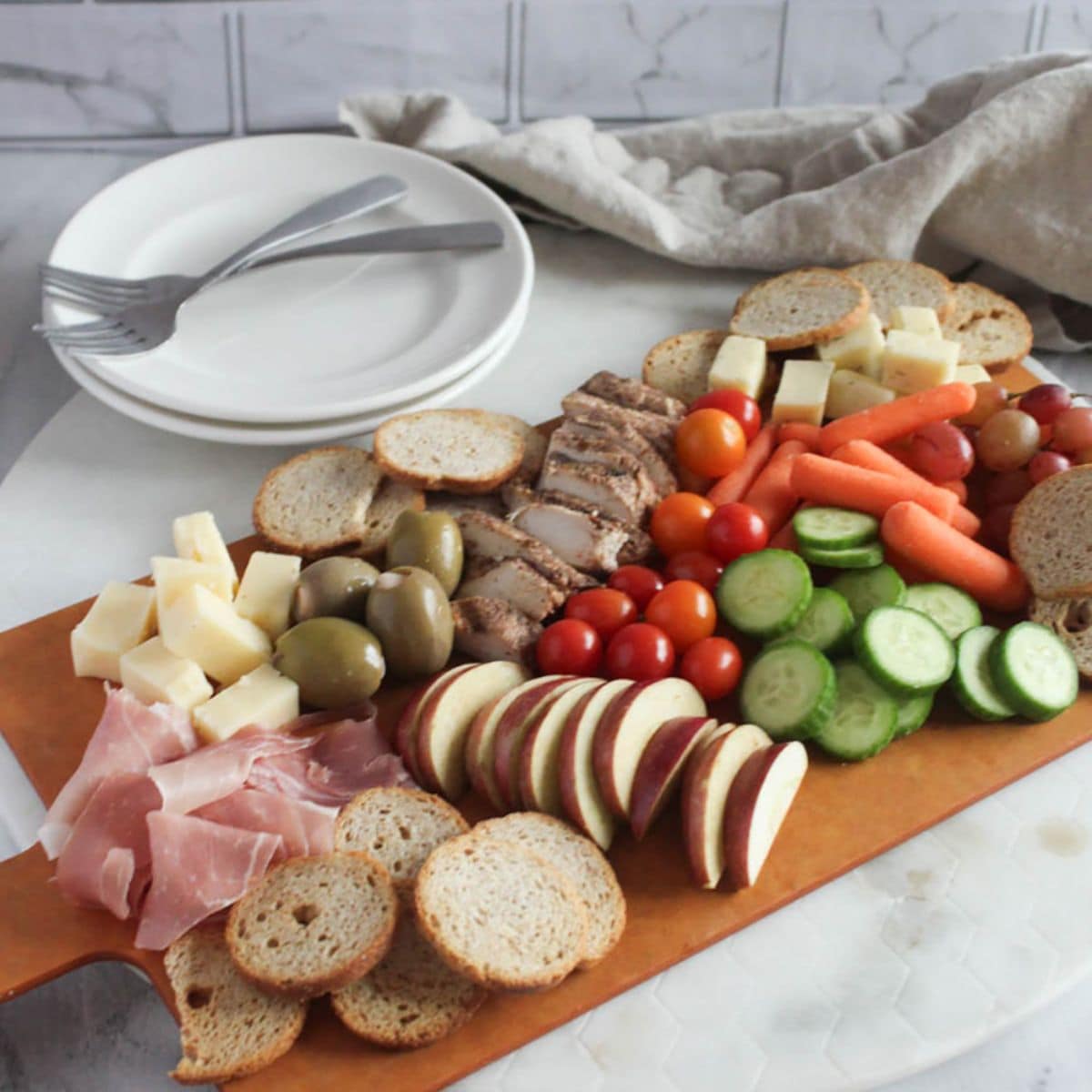
Healthy Charcuterie Board Ideas Packed With Fresh Flavor
Healthy charcuterie boards focus on more produce, lean proteins, and lighter dips, but still feel fun. For another take on this style, check out this build a nutritious charcuterie platter.
Fresh and light snack board with fruits and veggies
Build this board around color and crunch. Here are some items to try out:
- Raw veggies, like carrots, cucumbers, snap peas, and bell peppers
- Fresh Fruit, like berries, grapes, orange slices, or melon
- 1 or 2 dips and spreads, such as hummus or Greek yogurt ranch
- A small amount of cheese, like mozzarella balls or cheddar cubes
- A few nuts or seeds for crunch
This works well for afternoon snacks, kids playdates, or hot summer days when no one wants heavy food.
Protein-forward board with lean meats and wholesome sides
This board feels more like a light meal. Try these suggestions:
- Sliced turkey, chicken sausage, or baked chicken strips
- Hard-boiled eggs, halved or quartered or deviled eggs
- Hummus or bean dip
- Whole-grain crackers or pita
- Raw veggies and fresh fruit
It makes a solid lunch or post-workout snack board because it balances protein, carbs, and fiber.
Dinner Charcuterie Boards That Feel Like A Full Meal
A dinner board feels special but still low effort. It works well in summer or on relaxed weekends.
Classic meat and cheese dinner board
Go back to classic charcuterie roots and build a hearty spread. Try this:
- A mix of cured or uncured meats, like salami, prosciutto, and sliced chorizo
- Three to four cheeses, like soft Brie cheese and hard Manchego cheese
- Crusty baguette slices or toasts and crackers
- Olives, pickles, and nuts
- Dried and fresh fruit
- Spreads, such as mustard, fig jam, or honey
To make it a complete meal, add one or two sides. A simple green salad, roasted vegetables, or a pot of soup on the stove rounds it out alongside crusty baguette slices or toasts.
Mediterranean-inspired dinner grazing board
This style is bright, fresh, and works well for sharing. Here are some ideas to use:
- Grilled chicken strips or falafel
- Hummus and maybe a second dip like tzatziki
- Olives and feta
- Fresh veggies, like cucumbers, tomatoes, and peppers
- Pita or flatbread
- Simple salads, like chopped cucumber tomato salad or a grain salad
Most parts can be prepped ahead, so you can just pull everything from the fridge, warm the bread, and eat.

Vegetable Charcuterie Boards For Veggie Lovers
Veggie boards feel light but filling when you add plant-based proteins and good dips. If you want a full guide for this style, try this fresh veggie charcuterie board.
Colorful crudités board with dips
This board is all about raw and lightly cooked veggies. Here are some good veggies for dipping
Good veggies for dipping:
- Carrots, celery, and cucumbers
- Bell peppers and cherry tomatoes
- Blanched green beans, broccoli, and cauliflower
- Radishes and snap peas
Serve with two or three dips and spreads, such as hummus, Greek yogurt ranch, and pesto or a white bean dip.
You can wash and cut most veggies a day ahead. Store them in the fridge in containers with a damp paper towel to keep them crisp.
Roasted veggie board with grains and cheese
Roasting or grilling brings out sweet, deep flavors, try these suggestions:
- Roasted carrots, broccoli, cauliflower, peppers, and sweet potatoes
- A simple grain like quinoa, farro, or brown rice
- Cheese, such as feta or goat cheese, or plant protein like chickpeas or tofu
- Nuts for added texture
Serve warm or at room temperature. This style works well for cozy fall and winter dinners and pairs nicely with a simple green salad.

Brunch Charcuterie Board Ideas For Slow Mornings
A brunch charcuterie board is perfect for holidays, birthdays, or long weekend mornings when everyone eats in shifts. For more ideas, take a look at this morning grazing board ideas.
Bagel and lox brunch board
This classic combo feels fancy but is easy to set up.
- Sliced bagels and mini bagels
- Smoked salmon or lox
- Cream cheese, plain and flavored
- Sliced red onion, cucumber, and tomato
- Capers and fresh herbs
- Optional hard-boiled eggs
Arrange bagels on one side, spreads and toppings in the center, and salmon on the other side. Guests can build their own bagels just how they like them.
Sweet and savory breakfast board
Mix breakfast treats and protein so everyone finds something to love. Try someof these ideas:
- Mini pancakes or waffles (store-bought is fine)
- Fresh fruit, grapes, and berries
- Yogurt and granola
- Bacon or sausage
- A few cheese slices or cubes
- Small jars of maple syrup, jam, or nut butter
- Chocolate as a small treat option
You can cook bacon and pancakes ahead and warm them before serving, or use frozen waffles to keep it easy.

Seasonal Charcuterie Board Ideas For Every Time Of Year
Using seasonal produce like seasonal fruits keeps boards fresh, more affordable, and more flavorful.
Spring and summer boards with fresh produce
Lean into bright colors and juicy fruits. Here are the best choices for the warm seasons:
- Berries, cherries, and peaches
- Tomatoes, cucumbers, and radishes
- Fresh herbs like basil and mint
- Soft cheeses such as goat cheese or fresh mozzarella
- Lighter meats, like turkey or prosciutto
These boards are perfect for outdoor parties, picnics, and Mother’s Day brunch. Pack items that can handle a bit of heat and keep dips in small chilled bowls.
Cozy fall and winter boards with warm flavors
Cold-weather boards feel a bit richer and cozier. Try these on your cool weather boards:
- Apples, pears, grapes, dried fruit, and roasted squash
- Nuts like walnuts, pecans, and spiced nuts
- Aged cheeses such as triple cream cheese and cured meats
- Chocolate like dark chocolate pieces
- Warm dips, like baked brie or spinach dip
These work well for game days, Thanksgiving weekend snacks, or holiday gatherings by the fire.
Budget-Friendly Charcuterie Board Ideas That Still Look Fancy
You can build beautiful boards without spending a lot if you shop smart and keep the menu focused.
Smart shopping tips and lower cost swaps
Try these money savers:
- Buy cheese in blocks and slice it yourself.
- Pick one or two “special” cheeses like Manchego cheese, then fill in with cheaper ones such as cheddar cheese.
- Use seasonal produce, which often costs less and tastes better.
- Buy nuts and dried fruit from bulk bins.
- Watch for sales on crackers, meats, and olives.
- Use beans, eggs, or basic deli meats as budget proteins.
A simple bowl of seasoned chickpeas or hard-boiled eggs can stretch a board and keep costs down.
Small boards that still feel special
A small, focused charcuterie board can look more generous than a big, sparse one. Here are some ideas for 2 to 4 servings:
- Use a small board or dinner plate.
- Choose 1 to 2 cheeses and 1 meat or protein.
- Add one cracker, one fruit, and one veggie.
- Include one dip or spread.
Serve generous portions of each instead of many tiny samples. It will still feel fancy without buying half the store.
Shaped Boards For Holidays And Special Occasions
Shaped charcuterie boards are boards arranged into simple shapes, like trees, hearts, or flags, creating the perfect holiday-themed board. They are fun for holidays and parties, but they do not have to be fancy.
Holiday shapes like trees, wreaths, and hearts
You can turn almost any charcuterie board idea into a shape. Here are some simple holiday board ideas:
- Christmas tree shape with rows of grapes or cherry tomatoes, cheese cubes, and folded meat.
- Wreath made from a ring of veggies or grapes around a dip in the center
- Heart shape for Valentine’s Day with red berries, tomatoes, and salami
- Bunny shape for spring, using sliced veggies and small bowls for eyes
Foods that are easy to shape include grapes, cheese cubes, sliced meats, and round crackers. Use the natural lines of the board to guide your shape.
ROUND UP HERE.
Tips for keeping shaped boards simple and stress-free
Keep shapes loose and relaxed, not perfect. Here are some helpful tips:
- Picture the shape in your mind before you start.
- Use small bowls to outline the shape and fill around them.
- Stick to two or three main colors so it looks clear.
- Fill gaps with nuts, herbs, or small fruit.
- Repeat the same simple shape for different holidays, just change colors and toppings.
The idea is fun, not perfection. People are there for the food and company, not to judge your lines.
Pull out a charcuterie board, pick a theme, and try one new combo this week. You might find that “what is for dinner” feels a whole lot easier when it all fits on one board.
✨If you’re looking for a no-stress way to make dinner feel a little more fun, the Dinner Boards & Bars Pack has you covered.
This printable tool includes seasonal flavor combos, easy styling tips, and flexible ideas to turn a simple spread into a satisfying dinner any day of the week.
It’s great for holidays, weekends, or anytime you want a meal that feels special (without having to cook a full meal).
👉 [Get the Dinner Boards & Bars Pack here!]
Frequently Asked Questions About Charcuterie Board Ideas
A classic charcuterie board started as a tray of cured meats like salami, prosciutto, ham, and pâté, served with cheese, bread, and small extras such as pickles and mustard. Today, people use the term for almost any grazing-style board, including veggie boards, brunch boards, kid lunch boards, healthy snack boards, and even dessert boards. If food is arranged on a board and meant for snacking and grazing, most people still call it a charcuterie board.
For an appetizer board before a meal, plan about 1 to 1.5 ounces of cheese and 1 to 1.5 ounces of meat per person, plus a small handful of crackers or bread and a few pieces of fruit and veggies each. For a dinner board that replaces a full meal, plan about 2 ounces of cheese, 3 to 4 ounces of protein per person, at least 1 to 1.5 cups of bread, grains, or potatoes, and plenty of produce to fill the rest of the board.
A simple checklist works for almost any theme or board size. Include 1 to 2 proteins, such as cured meats, turkey, eggs, or tofu, plus 2 to 3 cheeses or other main items. Add 2 to 3 crunchy items like crackers, bread, nuts, or pretzels and at least 2 fruits or veggies for freshness and color. Finish with 1 to 2 dips or spreads, such as hummus, mustard, or jam, and extra bread or pita on the side. Aim for a mix of salty, sweet, crunchy, and creamy elements so the board feels balanced.
For last-minute guests, build a 5-ingredient no-cook appetizer board with two cheeses, one cured meat, one cracker or bread, and one fruit. For healthy eating, focus on fruits, veggies, lean proteins, bean dips, and smaller portions of cheese. For lunch, pack mini boards in containers for adults or kids using bite-sized proteins, cheeses, crackers, produce, and a small treat. For dinner, build classic meat and cheese spreads or themed boards like Mediterranean-style boards with hummus, olives, veggies, and pita. For holidays, arrange common items into simple shapes like trees, wreaths, hearts, or bunnies and keep the shapes loose and relaxed.