
How to Build a Healthy Charcuterie Board

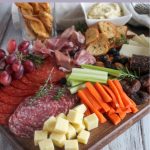
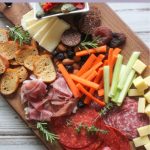
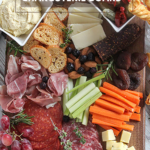

Who doesn’t love appetizers for dinner, especially when they come with a glass of wine and no real cooking involved? Traditional charcuterie boards are fun, but they’re often heavy on processed meats and rich cheeses. In this post, you’ll learn how to build a healthy charcuterie board using quality, wholesome ingredients. These foods are chosen because they’re real and satisfying, not because they’re low-calories so you can enjoy a snack-style dinner that feels good and still hits the spot.
Want to Save This Recipe?
Enter your email & I’ll send it to your inbox. Plus, get great new recipes from me every week!
By submitting this form, you consent to receive emails from Simple and Savory
Updated November, 2025. Rewritten for clarity with new tips.
Healthy Charcuterie Board At a Glance

What are the healthiest things to put on a charcuterie board?
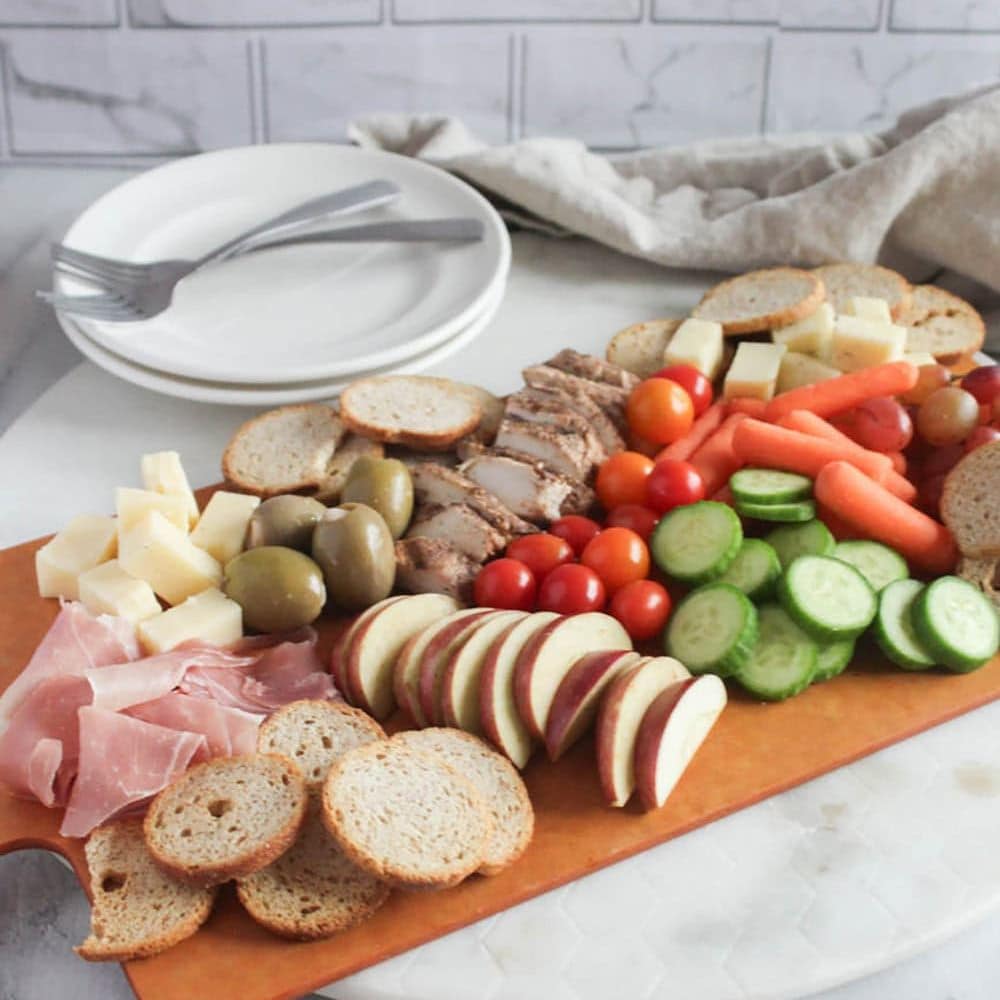
Fresh vegetables, fruits, lean proteins (like grilled chicken or turkey), uncured pepperoni, salami and prosciutto, raw or dry-roasted nuts, and whole-grain crackers are all great options. Add healthy dips like hummus or guacamole to round it out.
Healthy Charcuterie Ingredients
- Protein: uncured meats such as uncured salami, uncured pepperoni, uncured proscuitto, sliced turkey, sliced grilled chicken, hard-boiled eggs, roasted chickpeas.
- Cheese: fresh mozzarella, feta, goat cheese (optional, in moderation)
- Veggies: cherry tomatoes, cucumber slices, bell pepper strips, baby carrots
- Fruits: grapes, apple slices, dried apricots
- Crunch: whole grain crackers, seed crisps, toasted pita
- Dips/Spreads: hummus, guacamole, Greek yogurt dip, mustard
Healthy Swap Ideas
- Dry-roasted nuts instead of honey-roasted.
- Whole-grain crackers instead of buttery crackers
- Hummus or Greek yogurt dip instead of creamy dips
- More veggies and fruit, less cheese and cured meat
Serving Size Guide (Per Person):
- 2 – 4 oz meat
- 2 – 4 oz cheese
- ½ to 1 cup fruits and vegetables
- A small handful of crackers or bread.
These are only suggestions. Use more if you’re serving this as a main meal
Missing an ingredient? Find a substitute with the ingredient swap assistant!
How to Build a Healthy Charcuterie Board
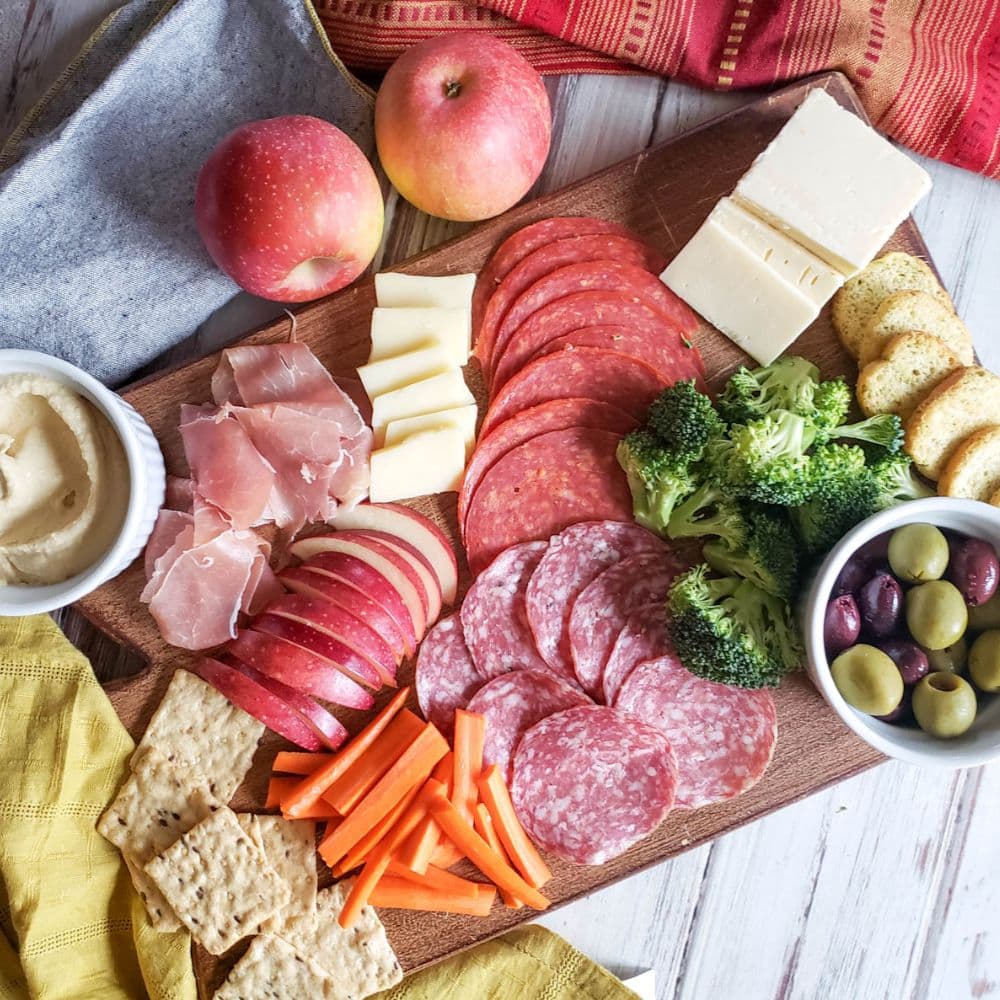
There are no set rules for building a healthy charcuterie board. The key is balance. Fill it with quality ingredients like nitrate-free meats, artisan cheeses, fresh vegetables, and fruit. Here are a few quick steps to get you started:
- Add small bowls for dips and olives as anchors
- Gill in with meats and cheeses
- Add veggies and fruit
- Fill in gaps with crackers and nuts
Choose a Board
Start with what you already have; no special equipment is required. A cutting board, wooden board, slate, marble slab, serving tray, cookie sheet, or even a big ceramic plate. Build it out. Aim for contrast as you go: creamy with crunchy, salty with sweet, familiar with something a little different. That mix is what makes a charcuterie board feel inviting and easy.
The Best Meats
Choose a mix of your favorite meats with different flavors and textures, think salty, smoky, spicy. To keep it on the healthier side, look for nitrate-free options that are minimally processed and lower in sodium, especially if you’re watching salt intake.
Can’t find nitrate-free? Look for artisanal or naturally cured meats.
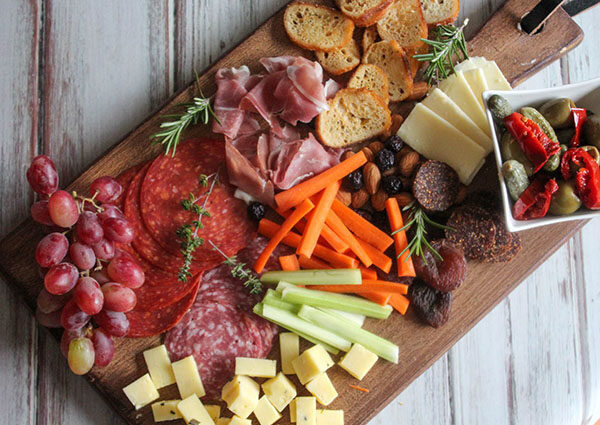
What I used on this board: naturally cured salami, pepperoni, and prosciutto.
Bonus: I also found fig salami, which is a great vegetarian-friendly addition and adds a little sweetness to balance the savory.
Thinly sliced deli meats or sliced boneless grilled chicken breasts are a good option if you are looking to cut calories.
The Best Cheeses for a Healthy Charcuterie Board
Use a variety of cheeses with different flavors and textures; aim for a mix of soft, hard, and spreadable options.
- Soft cheeses: brie, goat cheese, blue cheese, Camembert
- Hard cheeses: sharp cheddar, Parmesan, Gouda, Swiss
- Spreadables: Boursin, herbed cream cheese, or a soft goat cheese
What I used on this board: sharp cheddar with herbs and mild cheddar.
Fresh Seasonal Vegetables for Color and Crunch
Fresh, in-season vegetables brighten up any board with vibrant colors and refreshing flavor, and they add balance to richer meats and cheeses.
Try things like:
- Celery sticks and baby carrots (always a hit)
- Cherry tomatoes, bell pepper strips, roasted or hot peppers
- Cucumber slices, broccoli florets, and cauliflower
What I used on this board: celery sticks and carrots.
Try a grilled vegetarian charcuterie board or a falafel platter for some more healthy board options
Seasonal Fruits for a Sweet Balance
Fresh fruit adds a pop of color and a touch of sweetness — the perfect contrast to salty meats and rich cheeses. Choose what’s in season to keep it fresh, flavorful, and naturally vibrant.
Here are a few ideas:
- Fall/Winter: figs, pears, apples, grapes
- Spring/Summer: berries, cherries, peaches
- Dried fruit (like apricots or cranberries) works too — just use it sparingly, since it’s more concentrated in sugar.
What I used on this board: fresh grapes, dried apricots
Briny Bites for a Flavor Boost
Add something briny to balance out the richness on your board, a sharp, salty bite makes everything pop.
Try any of these:
- Olives (green, black, or stuffed)
- Dill or sweet pickles
- Pickled jalapeños, pepperoncini, or marinated artichokes
- Any kind of pickled veggies like carrots, beets, green beans
Pickled Foods Used: Greek Olive Mix, Hot Pepper Rings, Baby Dill Pickles
Bonus tip: Try making your own quick pickles and show them off on the board!
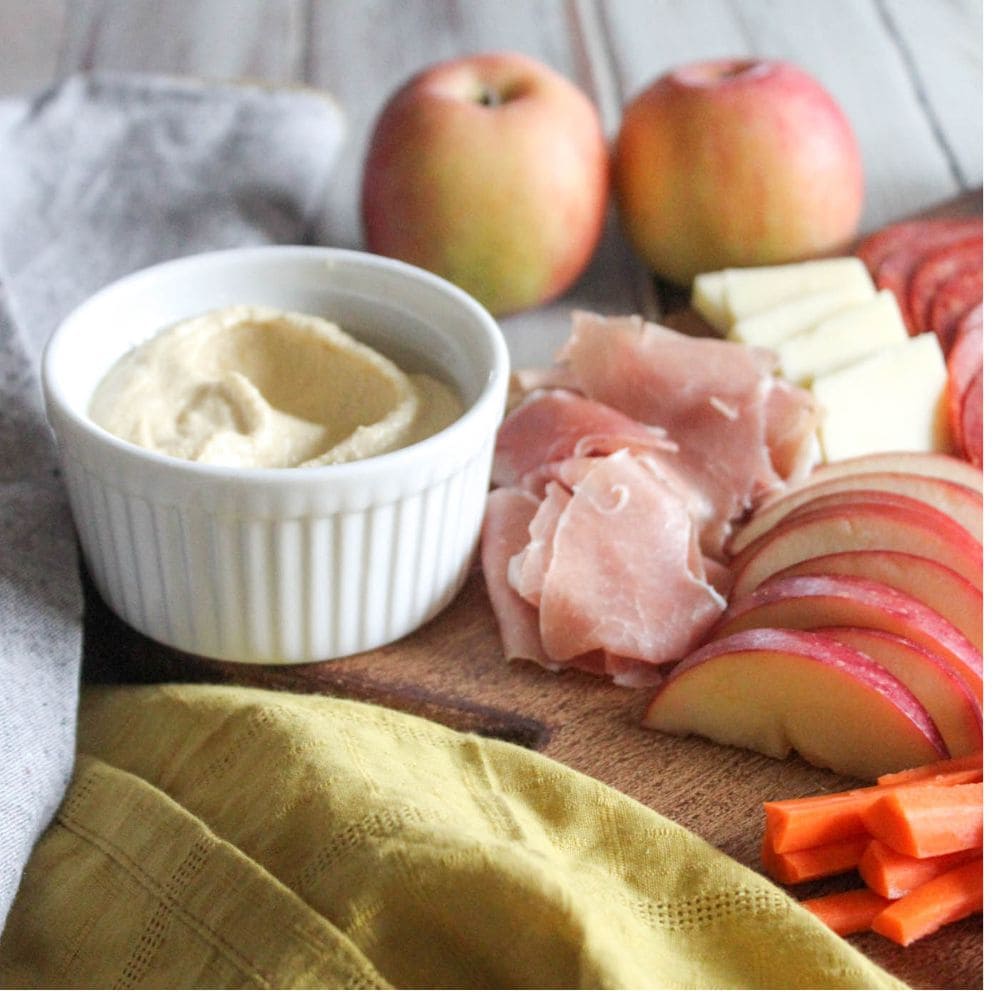
Spreads and Dips to Pull it All Together
Spreads and dips are a must, especially for those veggie dippers. They add flavor, texture, and a little something extra to balance out your board.
Here are a few healthy, flavorful options:
- Hummus (classic or flavored)
- Guacamole or avocado mash
- Fruit spreads or chutneys
- Gourmet mustard
- Bean dips or white bean purée
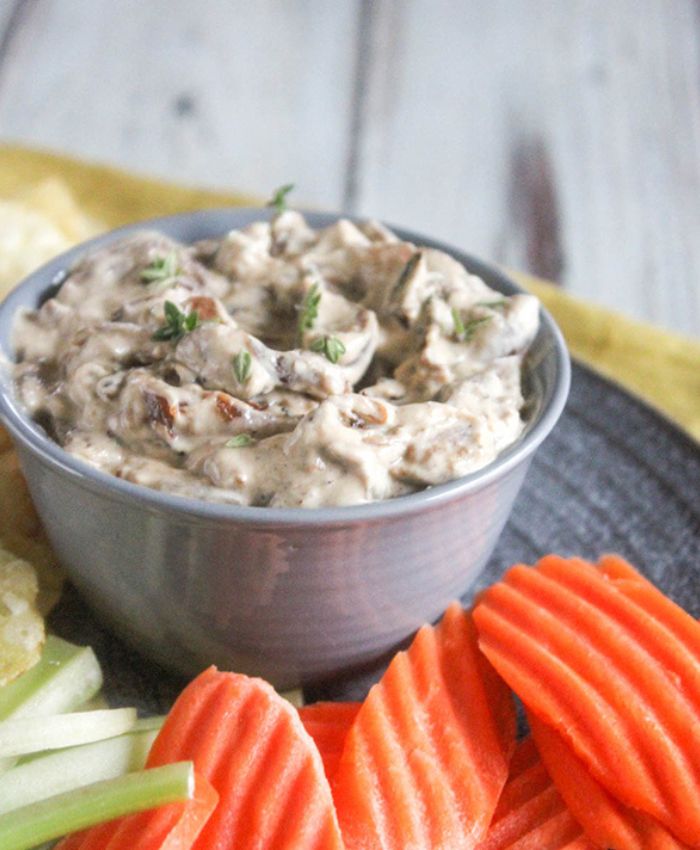
- Pâtés (try this mushroom pâté)
- Lighter takes on pizza dip or buffalo chicken dip
What I used on this board: Homemade Hummus
Nuts for Crunch and Texture
Nuts add a satisfying crunch and a dose of healthy fats. Choose raw or dry-roasted varieties with little or no added salt or oils. Nuts in the shell are also a fun (and portion-friendly) option. Cracking the shells slows you down and helps you stay mindful of how many you’ve eaten.
Want to add a little sweetness? Try these:
Both bring just the right amount of sweet heat and crunch to balance out your board.
Bread and Crackers for Dipping and Layering
Offer a variety of carbs so guests can stack, scoop, or snack however they like. Go for simple, sturdy options that pair well with meats, cheeses, and dips.
Here are a few to try:
- Whole wheat or seeded crackers
- Sourdough or French baguette slices
- Breadsticks or crostini
- Plain, lightly salted crackers
- Gluten-free crackers (for guests who need them)
What I used on this board: crostini and cheese sticks.
Healthy Charcuterie Board Tips
- Keep things bite-sized: Cut cheeses, fruits, and veggies into easy-to-grab pieces
- Add height and layers: Stack, fan, and fold items to make the board feel abundant
- Use variety: Mix textures (creamy, crunchy, crisp) with flavors (salty, sweet, tangy) and colors to keep the board interesting
- Don’t overdo it: You don’t need to load the board with everything; a few well-chosen items go a long way
- Keep it light: Load it up with fresh veggies, fruit, and lean proteins, and go a little lighter on the cheese and cured meats
Note: Healthy doesn’t always mean low calorie. A board made with real, high-quality ingredients can still be calorie-dense — especially with meats, cheeses, and nuts.
Serving Ideas to Make it a Meal
Charcuterie boards are almost a meal on their own. But you can easily round them out with something fresh or protein-packed. Try pairing your board with:
- An arugula, spinach, or chopped salad
- Cilantro lime shrimp or grilled chicken
- A light soup or seasonal veggie side
These add-ons keep things simple while turning snack board vibes into a satisfying dinner.
Charcuterie FAQs
Yes. Keep the board plant-forward with veggies, fruit, olives, and hummus. Then add smaller amounts of minimally processed meats and cheese, so you still get the classic feel without making those items the main event.
Use more vegetables and fruit, then scale back the cheese, cured meats, and nuts (they add calories fast). Choose lean proteins, keep portions smaller, and spread items out across the board so it still looks full.
Try roasted chickpeas, hard-boiled eggs, grilled tofu, or a hearty bean dip. Vegetarian-friendly options like fig salami and veggie pâtés also fit the charcuterie vibe and add variety.
Prep parts of it 1 to 2 days ahead (wash and cut produce, slice cheese, portion dips). Assemble the board about an hour before serving, then refrigerate until it’s time to eat.
Want to Save This Recipe?
Enter your email & I’ll send it to your inbox. Plus, get great new recipes from me every week!
By submitting this form, you consent to receive emails from Simple and Savory
Click on serving size to scale this recipe
How to Build a Healthy Charcuterie Board
Equipment
- Small Forks and Spoons
Ingredients
- 8 ounces thinly sliced meats salami, pepperoni, prosciutto, turkey, ham roast beef
- 2 Carrots cutinto sticks
- 2 stalks Celery cut into sticks
- 1/2 cup hummus homemade or store-bought
- 1/2 cup [Assorted Greek Olives]
- 1/2 cup [Baby Dill Pickles]
- 1/2 cup [Dried Apricots]
- 8 ounces Grapes small bunch
- 8 ounces [Fig Salami]
- 8 ounces cheese assorted
- 8 ounces crackers
- 1 cup Assorted Nuts
Instructions
- Place all of the ingredients onto a board or platter and enjoy!8 ounces thinly sliced meats, 2 Carrots , 2 stalks Celery, 1/2 cup hummus, 1/2 cup [Assorted Greek Olives], 1/2 cup [Baby Dill Pickles], 1/2 cup [Dried Apricots], 8 ounces Grapes, 8 ounces [Fig Salami], 8 ounces cheese, 8 ounces crackers, 1 cup Assorted Nuts
- The amount of items on the board depends on how many people you will be serving. The ingredient amounts above are for four servings. One to two slices of meat per person, and a few pieces of cheese.
Notes
- 2–4 oz meat
- 2–4 oz cheese
- ½ to 1 cup fruits and vegetables
- A small handful of crackers or bread
Nutrition
Nutrition information provided is an estimate and can vary based on cooking methods and ingredients used


one of my favorite things to serve at a dinner party
A beautiful charcuterie board! Making charcuterie boards have become one of my go-tos for entertaining – so easy to customize to tastes and always a crowd-pleaser.
Great